
SERVO AXIS WORKSHEET
Specify the motion.
Then choose the gearhead.
For a reversing servo axis, start with the permitted output error, motion cycle and motor drawing. A catalogue precision grade becomes useful only after it is tied to a frame, ratio, stage count and measurement condition.
Write the positioning budget in output units
Keep gearbox backlash, elastic deflection under load, coupling movement and the machine's required repeatability as separate entries. Ask which portion of the allowable error is assigned to the gearbox, and specify the load and direction reversal used for acceptance.
Scale example, not an axis-accuracy prediction: 3 arcmin = 0.05°. At a 100 mm radius, that angle corresponds to about 0.087 mm of arc travel. This conversion does not include compliance, control error or the rest of the mechanism.
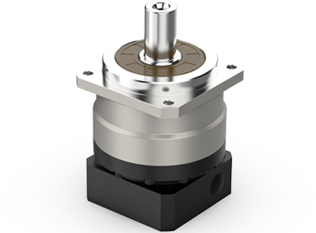
WANSHSIN's manufacturer profile links to the WVRB family. For frame WVRB090, the official table separates these limits by grade and stage. [1]
| Assembly | P0 | P1 | P2 |
|---|---|---|---|
| Single stage, listed ratios 3–10 | ≤1.5 | ≤3 | ≤5 |
| Two stages, listed ratios 15–100 | ≤3 | ≤5 | ≤8 |
The same P1 label therefore has two limits in this family. Copy the full assembly and grade into the RFQ, then request its test conditions. Grade letters alone are not a cross-supplier standard.
Check the ratio against the complete speed cycle
Illustrative requirement: 3,000 rpm motor speed and 150 rpm output imply a target ratio of 20:1. The WVRB table lists 20:1 in its two-stage group. That changes the applicable backlash row; it also calls for the selected unit's inertia, efficiency and speed limits. [1]
Use the maximum motor speed reached during the actual move, not only the speed printed in a nominal operating point. Send acceleration time, reversal frequency, dwell and emergency-stop conditions so the supplier can check the complete cycle. A ratio that fits the output speed does not by itself establish torque or settling performance.
Bring the load inertia into the motor calculation
Kollmorgen explains that reduction gearing reduces the load inertia reflected to the motor by the square of the ratio. [3] For an idealised rigid drive, Jreflected load = Jload / i². This term is only part of the sizing: include gearbox/coupling inertia and the motor's own rotor, and confirm the servo manufacturer's sizing and tuning criteria.
For illustration, 0.04 kg·m² of load inertia divided by 20² is 0.0001 kg·m². It is not the total inertia of the proposed motor/gearhead assembly.
Read what changes when the grade changes
The official KOFON FG090 ratio-4, single-stage row lists 80 Nm nominal torque for both its ultra-precision and P1 variants, but acceleration limits of 150 and 130 Nm respectively. Listed backlash is ≤1 and ≤3 arcmin. The lubrication note also separates oil for its ultra-precision/Z variants from grease for P1. [2]
That example makes the supplier question concrete: obtain a complete row and operating instructions for the requested grade. Do not change only a precision suffix in a quotation while retaining another variant's acceleration allowance or lubricant instructions. See the KOFON profile for the source trail and configuration checks.
Approve the motor fit before releasing the order
“Fits a 750 W servo” is incomplete. Send the motor maker and full model code with its dimensioned drawing. Have the supplier return one assembly drawing showing the motor adapter and the reducer together.
- Locating and fastening
- Flange pilot diameter/depth, bolt circle or square pattern, hole/thread sizes and seating faces.
- Torque connection
- Motor shaft diameter, tolerance, usable length, key or clamping arrangement, insertion depth and tightening access.
- Machine envelope
- Motor body/brake length, cable exits, reducer length, output flange/shaft and space for installation or removal.
- Loads and sign-off
- External radial/axial loads and overhang, mounting orientation, actual speed/torque cycle, drawing revision and full order code.
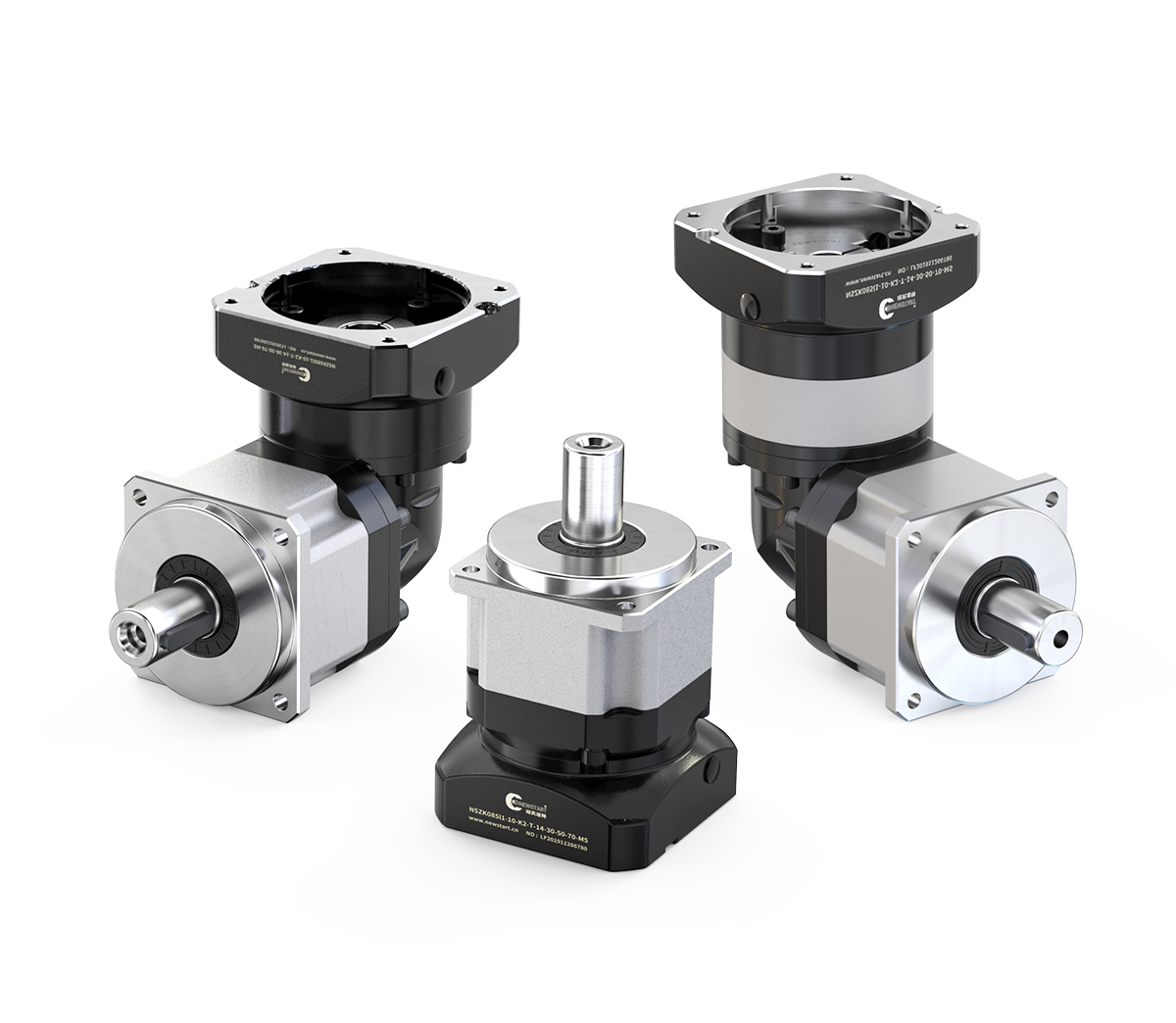
These are editorial procurement checks, not a claim that a pictured gearbox is compatible with every servo brand.
Send a servo-axis brief, not a nominal frame number
Attach the motion profile, load inertia and required output error; state the proposed ratio and stage count, motor drawing, continuous/acceleration/stop loads and the agreed backlash test. Request a selected model row, matching adapter drawing and lubrication instructions.
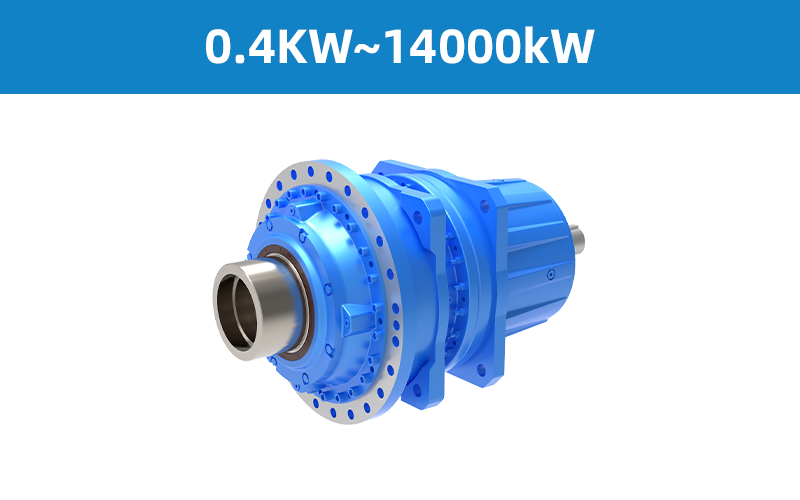
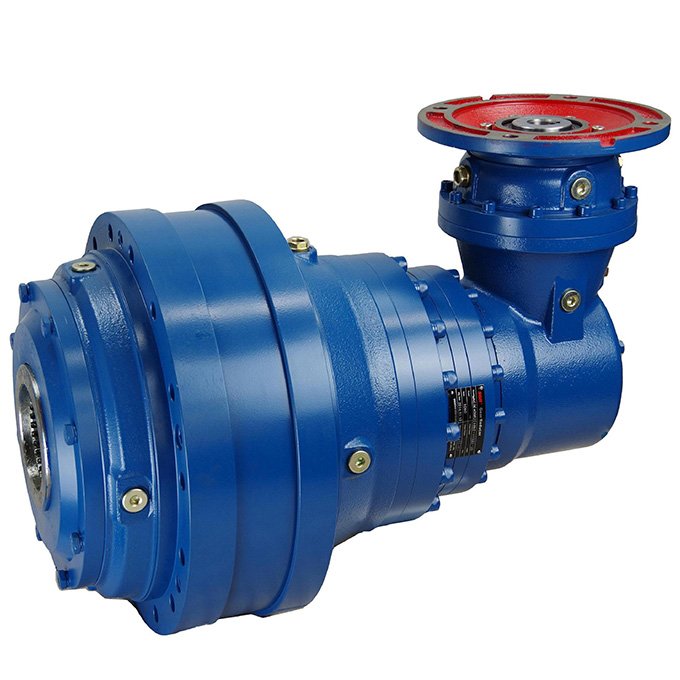
This worksheet concentrates on precision servo gearheads. Industrial planetary, hydraulic winch and miniature multi-stage drives in the wider directory need their own duty and interface assessment; the precision-grade examples above are not their specifications.
Prepare your technical enquiry →Browse the planetary manufacturers ↓ Pingyao XINKAI
 SIGGEAR
 Ruiding Precision Transmission
 BEITTO
 TECHMECH
 TIANYI
 TONGYU / JMC
 DESBOER / Nanpeng
 LinkedIn
 X
 Facebook
 WhatsApp
 Telegram
 Reddit
 Email