
 Industrial geared drives & gearbox procurement
TONGLI
Bring the machine layout, load duty and inspection requirements.
TR inline helical and TK right-angle spiral-bevel drives offer different routes into a machine. TONGLI also distinguishes general-purpose reducers from heavy-duty industrial gearboxes. Select the architecture by shaft direction and duty, then agree the exact rating, mounting drawing and production records for the order.
Shaft arrangement comes first
Inline TR and right-angle TK solve different packaging problems.
The TR page describes a hardened-tooth helical family and combinations with other reducers/variators. The TK page describes Gleason-system spiral-bevel gearing for right-angle transmission or constrained vertical space. Check the selected complete assembly drawing for motor position and input/output direction.
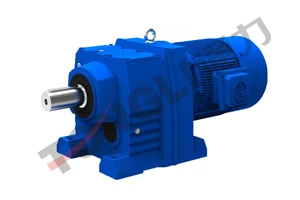
TR · inline helical route
Consider the TR layout when motor and driven-shaft arrangement can accommodate inline transmission. Include available axial length, shaft height and maintenance/removal clearance.
Existing TR specifications →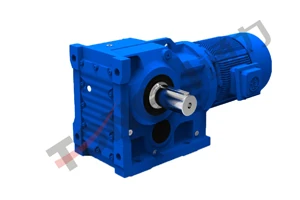
TK · right-angle route
Consider TK when the motor must sit at right angles to the driven shaft. Show the required output side, motor envelope, reaction support and surrounding guards.
Existing TK specifications →| Published family envelope | TR | TK |
|---|---|---|
| Frame list envelope | TR18–188 | TK38–188 |
| Reduction ratio range | 3.37–289.74 | 5.36–197.37 |
| Output-speed range | 5–445 rpm | 7.5–280 rpm |
| Published maximum output torque | 50,000 Nm | 50,000 Nm |
| Input-power range | 0.18–200 kW | 0.18–200 kW |
These endpoints span multiple frames and configurations. They do not describe one unit operating simultaneously at maximum power, torque and speed. Request the selected frame/ratio rating at the actual input speed, duty and installation orientation.
Translate the application into a load case.
TONGLI names metallurgy, mining, conveying and chemical mixing among its applications. The drive enquiry should describe what the machine does during the complete cycle.
Running load, starts and jams
Send speed, throughput, loaded starting torque, start frequency, operating hours and jam conditions. If a pulley or sprocket sits on the output shaft, specify force direction and overhang for the bearing check.
Process duty and agitator support
Describe fluid properties, temperature, mixing cycle, impeller/shaft geometry and transient loads. Define which bearings carry radial, axial and tilting loads, and whether the reducer or another assembly supports the agitator shaft.
Shock and installation environment
Provide the time/load history, start/stop and abnormal-load assumptions, dust/temperature exposure and cooling access. Confirm whether a general-purpose reducer or a separate industrial-gearbox design matches the duty.
For each route, ask for mechanical and thermal ratings, external-load capability, selected service/life assumptions and lubricant quantity/type. Holding or safe stopping requirements belong in the complete machine brake/control specification.
An order-specific evidence pack
Trace critical processing to the delivered gearbox.
TONGLI's 2025 annual-report summary describes predominantly in-house precision machining, with heat treatment, rough machining and certain other steps outsourced. It also describes outsourced-work agreements specifying quality standards and delivery terms.
That is a production-scope disclosure. Qualification should follow the actual part, process and batch rather than assume every process occurs at the assembly site.
Material and processing identity
Agree the critical gear/shaft materials, heat-treatment specification, drawing revision and relevant part or batch identifiers. Request the treatment report and acceptance evidence for the delivered scope, including outsourced processing where applicable.
Measured results and test conditions
Where hardness, case depth or gear accuracy are required, specify location, method, sampling and acceptance criteria. For finished-unit tests, define speed/load, temperature, lubrication, noise/vibration and leak-check conditions relevant to the order.
Assembly and traceability
Match the inspected assembly to its selected model code, ratio, mounting orientation and serial/lot record. Include lubricant, fastener/installation instructions and any motor, cooling or monitoring components in the agreed supply list.
Review the evidence before shipment
Use an inspection plan with named hold/review points, deliverables and responsibility. An annual report or a family brochure helps identify a supplier; it does not replace the order's inspection record.
A replacement enquiry needs the installed condition as well as the nameplate.
TONGLI's report includes parts and repair services. For an existing drive, show what has changed in the machine or failed in service before requesting a replacement or repair proposal.
Current unit and mating equipment
Nameplate, model/ratio, motor, complete drawing, coupling or shaft/bore dimensions, mounting/support and any prior modification. Confirm the actual supplier and product revision.
Duty and observed condition
Working load/speed, starts/jams, environment, lubricant history, leaks, temperature/vibration observations and failure photographs. Distinguish measured observations from suspected causes.
Replacement or repair boundary
Selected rating and drawing, reuse/replace scope, disassembly findings, inspected components, acceptance tests, spares and return-to-service instructions. Agree delivery assumptions in the quotation.
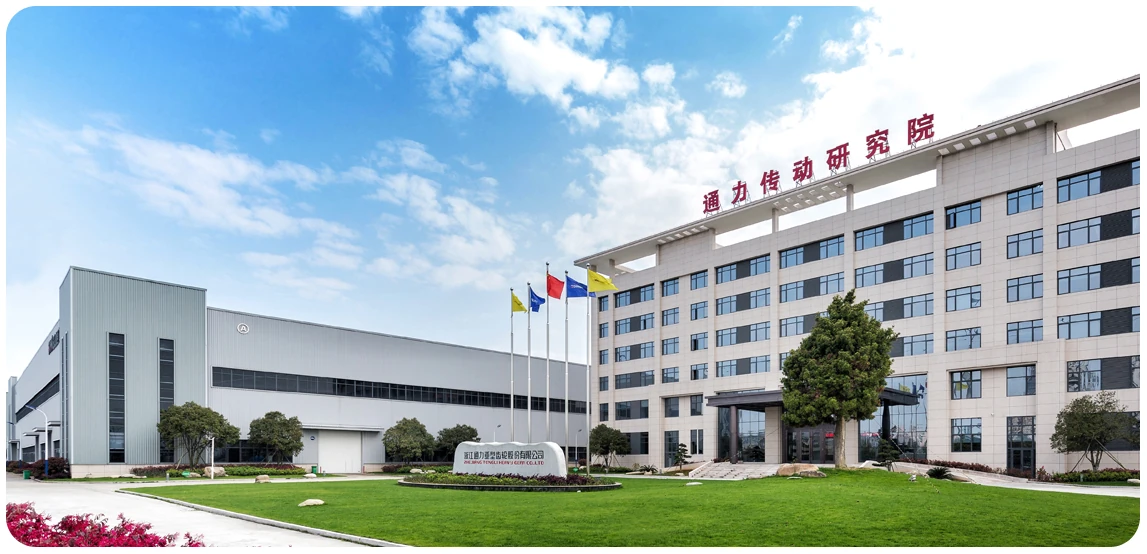
Company identity and product boundary
The official introduction identifies Zhejiang Tongli Transmission Technology, formerly Zhejiang Tongli Heavy Gear, and traces the business to 2008. It describes separate general-reducer and industrial-gearbox production bases.
The 2025 report identifies the legal company, Shenzhen listing code 301255 and its Ruian office address. It distinguishes general-purpose units typically serving light/medium loads from larger industrial gearboxes for heavy torque and shock applications.
Use that distinction to qualify the proposal. Ask TONGLI to identify the manufacturing site, selected product category and responsibility for supplied components on the quotation and approved documents.
Give TONGLI a load case and an acceptance scope.
Combine the drive architecture, machine interfaces and records needed for qualification.
Save TONGLI to include it in your request.- Machine/application, quantity, destination and contracting entity.
- TR/TK or industrial-gearbox route, output speed/torque and input motor.
- Load/time cycle, starts, shocks, operating hours and environment.
- Input/output drawings, mounting orientation, external loads and cooling space.
- Materials/process scope, traceability and agreed inspection/test conditions.
- Replacement/repair needs, spare parts, lubricant and service documentation.
Sources & review
Reviewed 8 October 2026. TR/TK values are supplier-published family envelopes; machine-duty and evidence-pack guidance is editorial.
- TONGLI · TR helical family ↗Frame/ratio/speed/torque/power envelopes, application description and official product image.
- TONGLI · TK spiral-bevel family ↗Right-angle architecture, family envelopes and official product image.
- TONGLI · official company introduction ↗Current/former company names, 2008 history, two production-base description and company photograph.
- Shenzhen exchange disclosure · TONGLI 2025 annual-report summary ↗Pages 1–4: entity/address/listing, general-versus-industrial product categories, parts/repair and production/outsourcing scope. Not model certification.
 LinkedIn
 X
 Facebook
 WhatsApp
 Telegram
 Reddit
 Email